
Students Learn to Read by Reading. Two Things Are Getting in the Way.
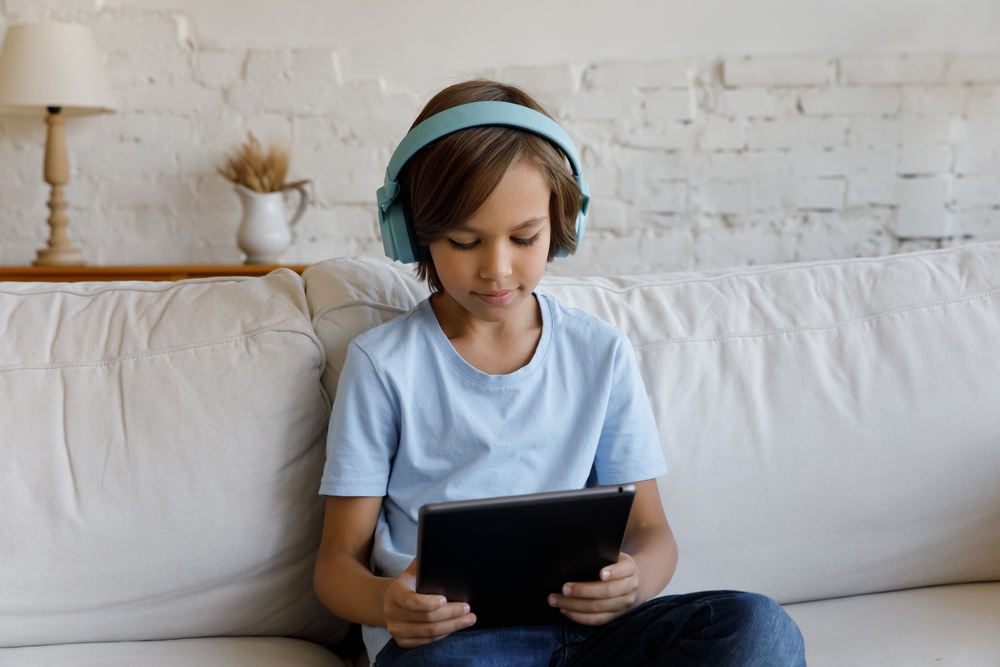
A fourth-grade class gets a two-page passage about volcanoes. Ten minutes in, a third of the room has stopped. Some stopped at the second paragraph. A few never started, because the words on the page are not the words they use at home. The teacher could have named most of these students before the passage went out.
Students learn to read by reading. That sounds plain enough, but that understanding sets the standard for every nonfiction purchase a school library makes. A book a student does not finish has not taught that student anything. So the useful question for a librarian or a curriculum coordinator is narrower than it first appears: which nonfiction gets finished, and by which students?
Two things are working against the answer right now. They are separate challenges with separate causes, and a library has some control over both.
The students falling behind are the ones who read the least
On the 2024 NAEP reading assessment, 40% of fourth graders and 30% of eighth graders scored below NAEP Basic. The more useful detail is the shape of the decline. Scores fell at every percentile except the 90th, which means the students who lost ground were already the furthest behind. They are also, predictably, the students who read the least by choice.
Attention is part of what changed. A four-year study from the Karolinska Institutet and Oregon Health & Science University followed 8,324 American children from about age nine and found that average social media use climbed from roughly half an hour a day to two and a half hours by age thirteen. Of the digital media the researchers tracked, social media was the only one associated with a gradual rise in inattention symptoms. The authors note that the effect on any individual child was small, though a small shift across a whole population still shows up in every classroom.
A school cannot change how a student spends the afternoon. It can change what a nonfiction text asks of a student during the hours it does control. A printed nonfiction page asks a nine-year-old for sustained attention before anything has earned it. That was a reasonable ask when the competition was a different book.
The consequence reaches past the reading score. The Stanford History Education Group found that 82% of middle schoolers could not tell a sponsored advertisement from a news article. Nonfiction is the text type students will be asked to evaluate for the rest of their schooling. A student who never finishes one does not build the comprehension that evaluating it requires.
The classroom is increasingly represented by non-native English readers
English learners are 10.6% of U.S. public school enrollment, or 5.3 million students, up from 9.4% a decade earlier and reaching 20.2% in Texas. Spanish is the home language for 76.4% of them, and enrollment is concentrated in the elementary grades.
Most school libraries hold a strong English nonfiction collection and a thinner Spanish one. The students who read Spanish get fewer topics, fewer reading levels, and less practice. Access to information is uneven, so the opportunity to build the skills that come from reading it is uneven too.
Buying parallel Spanish titles rarely closes the gap. It doubles the spend, and the two collections drift, so the Spanish reader and the English reader in the same class end up on different subjects in the same week. A teacher who wants the class discussing one topic has to choose which students to leave out of it.
Four things a library can do about both
Judge nonfiction by whether students finish it. Quality and accuracy are the floor. Completion is the measure that predicts whether a collection does anything for the students who need it most. A circulation report that shows checkouts without completion is measuring interest, not reading.
Give a student more than one way into the same text. A student who stalls on a paragraph can start with a video tied to that section, an audio read-aloud, or an infographic that pulls the data out of the text. The media holds attention long enough for the reading to happen. Short sections do the rest, because a student who cannot manage a full page can still manage shorter passages.
Put both languages in the same book. When a title switches between Spanish and English on any page, with the same content and the same questions in both, a teacher assigns one book to the whole class. Every student covers the same material and gets the same opportunity from it.
Shelve by topic, the way print has always been shelved. School libraries have organized children’s nonfiction by interest and topic for decades, because that is how a kid looks for a book. Digital collections often organize by publisher series, which means a student browsing one lands in a list of names chosen for someone else’s convenience. A shelf that says Sea Life gets used. A series number does not.
Where this leads
None of this asks a school to fix how students take in information everywhere else. It asks a library to stop buying nonfiction that only works for students who were already going to finish it.
Infobase built Immersive eBooks around these four ideas. It is a series K-8 nonfiction packages totaling 1,645 titles, each presenting the same content as text and as multimedia, with the text divided into short sections. The Dual Language package carries 280 titles that switch between Spanish and English on any page, and the World Languages package covers 18 languages. Packages are sold by grade band, each including both STEM and Social Studies, so a librarian or curriculum coordinator buys for one specific need.
