
Immersive eBooks

— Librarian reviewer, design preview
Talk to an Infobase expert about bringing K-8 nonfiction ebooks to your schools.
*Required field
Immersive eBooks blend text with video, audio, activities, and discovery. Every title has a standards correlation and an interest level, so a teacher can trust what they assign. Titles are grouped by curricular and interest topic, so a K-8 student can browse to what they need without a librarian translating a catalog first.
A kid who opens one of these does more than read a page. They get lost in it. That's the point, and it's how a reluctant reader turns into a lifelong learner.

Reading proficiency is at its lowest recorded point
On the 2024 NAEP reading assessment, 40% of fourth graders and 30% of eighth graders scored below NAEP Basic. Scores fell at every percentile except the 90th, so the students who lost ground were already the furthest behind. They are also the students who read the least by choice.
Attention is part of what changed
Children spend about two and a half hours a day on social media, where content arrives in short clips one after another. 2025 research from the Karolinska Institutet, published in Pediatrics Open Science, associates that use with inattention symptoms. A school cannot change how students take in content everywhere else. It can change how nonfiction is presented during the hours it controls.
Comprehension comes before information literacy
The Stanford History Education Group found that 82% of middle schoolers could not tell a sponsored advertisement from a news article. Nonfiction is the text type students will be asked to evaluate for the rest of their schooling. A student who never finishes a nonfiction book does not build the comprehension that evaluating one requires.
Educators make the case more plainly:
Kathy S. | Library Media Specialist
Rose B. | 5th Grade Teacher
We wrote about what that asks of a school library in Students Learn to Read by Reading.
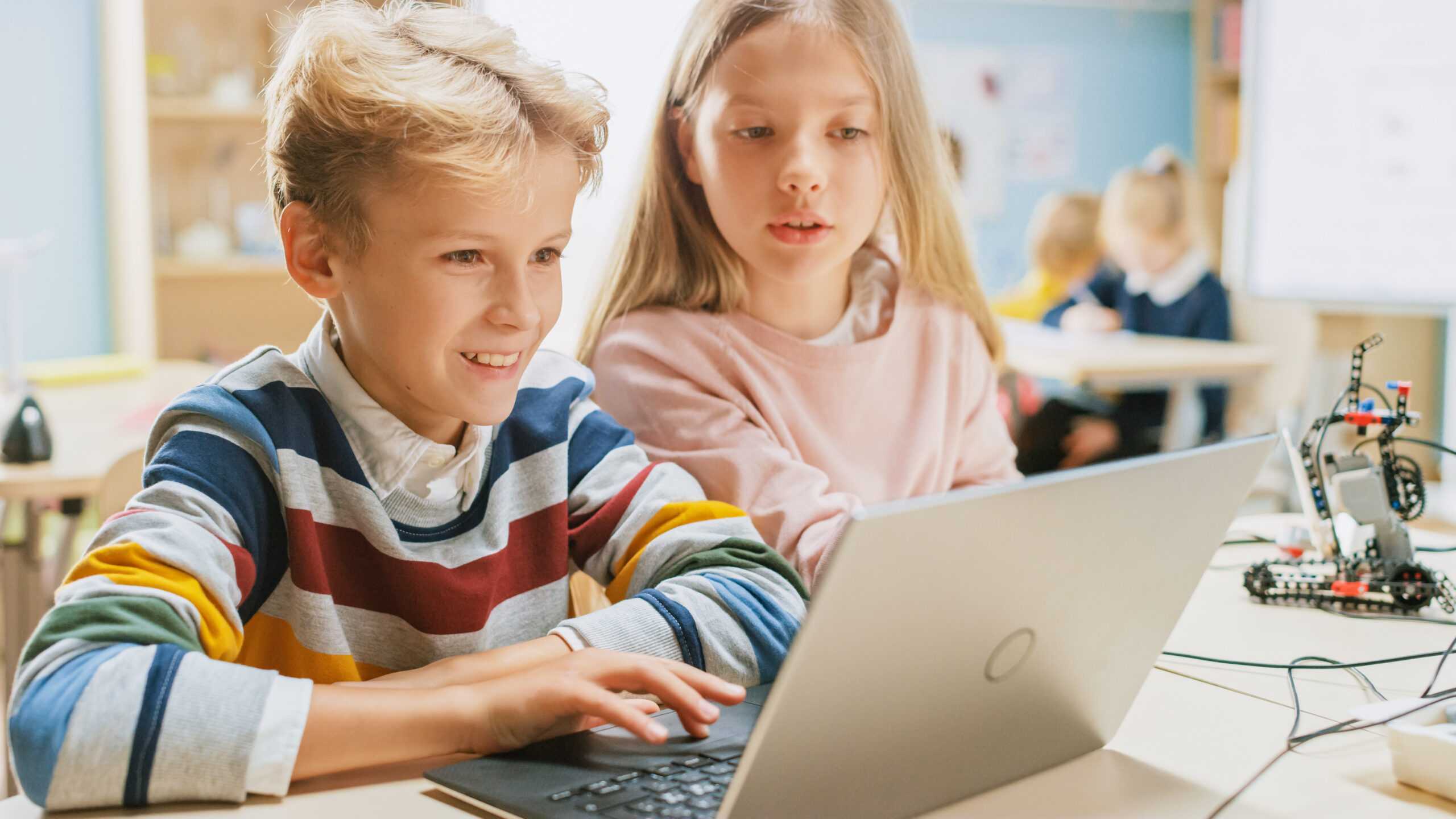
A printed nonfiction book gives a nine-year-old one way to engage. If plain text fails, the student loses interest and the book goes back on the shelf. Each Immersive eBooks title balances traditional text against multimedia. A student reads the passage, watches a short video tied to that section, listens to it read aloud, studies an infographic that draws the data out of the text, and completes a hands-on activity. The multimedia holds the student’s attention. The text builds the reading.
Eight ways into one book
Every title has the same factual content in eight forms, and the student picks the route.
The text is divided into short sections, so a student who cannot manage a long page still gets through a whole book.
English learners are 10.6% of U.S. public school enrollment, or 5.3 million students, up from 9.4% a decade earlier.
Spanish is the home language for 76.4% of them, and enrollment is concentrated in the elementary grades.
A dual language classroom usually runs on two sets of material, the English text for most of the class and whatever Spanish-language nonfiction the library managed to buy. Buying parallel Spanish titles doubles the spend, and the two collections still end up uneven. When a library holds fewer Spanish and other non-English titles than English titles, students have uneven access to the same information. Uneven access means uneven opportunity to build the same skills.
Add suporting content if needed or delete.
On the 2024 NAEP reading assessment, 40% of fourth graders scored below NAEP Basic, the largest share since 2002. Among eighth graders, 33% scored below NAEP Basic, the largest share in the assessment’s history. Scores then fell at every percentile except the 90th, so the students who lost ground were already the furthest behind. They are also the students who read the least by choice.
Children average roughly two and a half hours a day on social media, and 2025 research from the Karolinska Institutet, published in Pediatrics Open Science, associates that use with inattention symptoms. A school library cannot reduce the hours a student spends looking at a screen. It can, however, change what is on the screen during the hours it controls. A nonfiction text competing with a phone therefore has to offer more than a page of type.
The Stanford History Education Group found that 82% of middle schoolers could not tell a sponsored advertisement from a news article. Nonfiction is the text type students will be asked to evaluate for the rest of their schooling, and it is also the text type most reluctant readers avoid. A student who never finishes an informational text has not built the comprehension that evaluation depends on.
English learners made up 10.6% of U.S. public school students in fall 2021, or 5.3 million children, up from 9.4% a decade earlier and reaching 20.2% in Texas. Spanish is the home language for 76.4% of them. Enrollment also skews toward the elementary grades, so most of that need is in K-8.
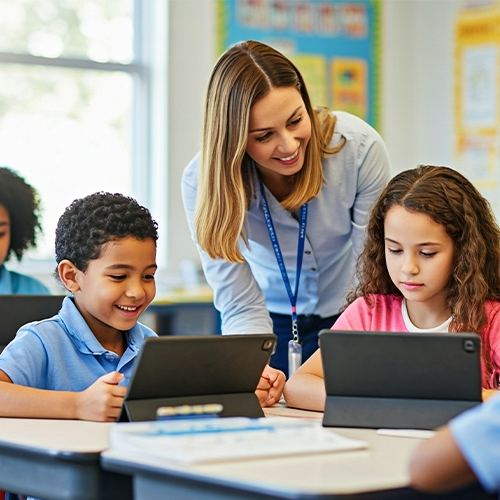
School libraries have organized children’s nonfiction by interest and topic for decades, because that is how a kid looks for a book.
Digital collections do not always follow.
Immersive eBooks follows the print convention. Open the grades 3-5 STEM set and the topic areas are the first thing a student sees: Air, Earth & Water. Energy. Machines. Sea Life. Nature’s Builders and Designers. A grades 6-8 social studies shelf says Government & Civics, and inside it a student finds forms of government, citizenship and immigration, voting rights, and corruption and transparency. Every title also has an interest level, so a teacher can assign by reading level inside one shared topic while the whole class discusses the same subject.
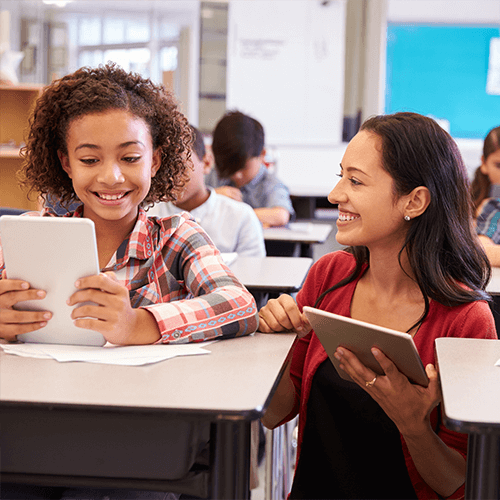
The Grades K-6 Dual Language package has 280 titles that switch between Spanish and English on any page.
The Grades K-2 World Languages package has 125 titles that switch text across 18 languages.
The content, the activities, and the questions are identical in every language. A Spanish-dominant third grader and an English-dominant third grader read the same book on the same volcano and answer the same questions about it, so a teacher assigns one book to the whole class and every student gets the same opportunity from it.

Teachers assign titles inside a unit of study through the LMS.
Librarians build book lists and link them from the library page. Students browse and choose on their own.
All three work, because the supports are built into each book. A reading interventionist can assign self-paced titles to students who need more time with a concept, and a library can keep the collection open through the summer. A student reading at home in July still has the audio, the short sections, and the key word activity with no teacher present.

A librarian serving a multilingual population. |
|---|
A K-5 school running a 50-50 Spanish-English immersion model, or a building where the home languages outnumber the translated books on its shelves. The Dual Language package has 280 titles in both languages for one price, and World Languages adds 125 more across 18 languages. |
A curriculum coordinator supplementing a reading program. |
|---|
A district adopted a core reading program that is light on informational text, and the fourth grade team reports that the assigned nonfiction passages lose students by the second page. The Grades 3-5 package goes in as supplemental reading, keyed to the science and social studies units already on the calendar. |
A district librarian with money left in the fiscal year. |
|---|
A few thousand dollars remaining and a middle school with almost no digital nonfiction. A title-by-title order takes weeks of selection, while the Grades 6-8 package is one purchase order and 240 titles. |
A librarian building digital reading and video. |
|---|
A collection that already streams video but runs thin on digital nonfiction. Every Immersive eBooks title has embedded video alongside the text, so one subscription adds to both collections at once. |
Each package covers one grade band and includes both STEM and Social Studies. A librarian with one grade band to cover, or one curriculum area to fill, avoids an all-or-nothing choice.

500 titles in STEM and Social Studies sets
500 titles in STEM and Social Studies sets
240 longer, more in-depth titles in STEM and Social Studies sets
125 titles, text switchable across eighteen languages
280 titles, switchable between Spanish and English on any page
Titles sit on browsable topic shelves rather than publisher series names, which is how school libraries have organized children’s nonfiction for decades. Open the grades 3-5 STEM shelf and a student sees Air, Earth & Water, Energy, Machines, Sea Life, and Nature’s Builders and Designers. A grades 6-8 social studies shelf says Government & Civics, and inside it a student finds forms of government, citizenship and immigration, voting rights, and corruption and transparency.
Elementary series include The Human Body, Biomes of the World, Changing Matter, Space Science, Classifying Animals, Seasons of the Year, America’s Native Peoples, American Presidents, Symbols of the United States, Holidays Around the World, and Know Your History. Secondary includes the Lightbox Literature Series and The Beginner’s Guide to Physics.
Infobase hosts Immersive eBooks. in addition to other decades-trusted K-8 resources.
Product and platform features


Browse the full Infobase solutions catalog, or connect to your existing data sets through federated search.
Infobase has supported literacy in schools and libraries for 85 years, reaching more than 120 million learners in 70+ countries. TIME also named us one of the World’s Top EdTech Companies of 2026.

Immersive eBooks are available October 1, 2026. Talk to your Infobase representative about pricing, consortium rates, and which packages fit your grade bands. Implementation and setup service comes with every subscription, so your titles are embedded and assignable from day one.
