
World News Digest Archive, 1940–2010
The historical record your researchers can trust
The World News Digest Archive is the only place to outright own the digital version of the complete 70-volume print run of World News Digest — 3,654 issues featuring 300,000+ thoroughly fact-checked news summaries, published weekly from 1940 to 2010, distilled from 100+ major sources and written with one purpose: to be permanently right.
Talk to an Infobase expert to learn how you can access this new collection—complete the form today.
*Required field
The news is everywhere. The record is here.
Raw newspaper archives are invaluable — but they hand your researchers a problem as large as the collection itself. Every outlet has its own slant. Verification requires cross-referencing multiple sources. Plus, retrieving a coherent account of a single event can take days.
World News Digest was founded in 1940 to address that problem directly. Each week, a dedicated editorial staff of experts in their coverage areas read more than 100 major newspapers, news magazines, periodicals, and government sources— and synthesized everything into a single, cross-checked, authoritative account. Not a headline. Not an editorial. A permanent factual record of what happened, sourced and verified. Over the course of seven decades, the work totals more than two million staff hours.
The Archive makes that work available digitally for the first time. Now, your researchers can reach the verified account of history without doing the source-reconciliation work themselves.
Different institutions. The same outcome: research that doesn't have to start from scratch.
For academic and research libraries
Faculty and doctoral researchers in history, political science, international relations, or media studies need a contemporaneous factual record. Rather than a single newspaper’s perspective, World News Digest Archive presents a synthesized account of the journalism of the time. A researcher tracing U.S. foreign policy in Latin America can pull a continuous, cross-checked weekly record from 1940 through 2010. A historian studying the dissolution of the Soviet Union can follow that story week by week, with each article linked to prior coverage of related events.
For ARL institutions, this belongs alongside your newspaper microfilm holdings and government documents — fully searchable, persistently accessible, and owned outright.
For journalism schools
Your students are learning to report and fact-check in an environment where trust in news media is near historic lows. Teaching them how fact-checking worked — what sources professional journalists and researchers relied on, what a verified factual record looks like — is increasingly valuable. See how editors expertly trained in journalism standards and well-researched their coverage areas.
Researchers and fact-checkers at the New York Times, the Washington Post, NBC News, ABC News, CBS News, CNN, Fox News, and Jeopardy have turned to World News Digest as a reference source. Now, the Archive lets your students use the same tool — and study how contemporaneous consensus reporting was constructed around events like Watergate, 9/11, or the Iran Hostage Crisis.
For institutions with a former print subscription
You already know what this collection is worth. Moving it from print volumes to a fully searchable digital platform changes what your researchers can do with it. Now at a discounted introductory rate for former subscribers, the investment reflects the relationship you already have with the collection.
There are other archives. This one is built differently.
Institutions evaluating historical news collections will likely encounter several alternatives. Here is how the Archive compares.
Newsbank / Readex | Keesing’s World News Archive | Newsela |
|---|---|---|
NewsBank and Readex give researchers access to individual newspaper pages, preserving the voice and framing of each outlet — the right tool when source-level variation is the object of study. When researchers need a pre-synthesized, cross-checked account, it’s not: they have to do that synthesis themselves. World News Digest Archive is where that work has already been done. | Relative to Keesing’s 95,000 articles, World News Digest has 300,000+. The collection draws more deeply on American and Commonwealth press, and is better suited to U.S.-focused academic research. Plus, World News Digest Archive is a one-time perpetual purchase rather than a subscription. | Newsela is a K–12 reading and assessment platform. It serves a different audience entirely. World News Digest Archive is a primary source research collection for academic and professional contexts, with no leveled reading, quizzes, or curriculum alignment features. |
70 years of weekly publication. One searchable platform.
Full-text search
Covers all 300,000+ articles. Specifically, researchers can search by keyword across the entire 70-year span and filter results by event or issue dates and file type
Longitudinal article linking
Connects an article to prior coverage, making it practical to follow ongoing stories — the Cold War, the Middle East conflict, U.S. elections, the space program — across decades of continuous reporting without reconstructing the thread manually.
Issue-based browsing
Preserves the original weekly publication sequence. This way, researchers can understand each story in the context of the broader news environment of its moment.
Advanced filtering
Gives archivists and power users the tools needed to work systematically through large sections of the collection.
The events that defined the 20th century — documented every week as they happened.
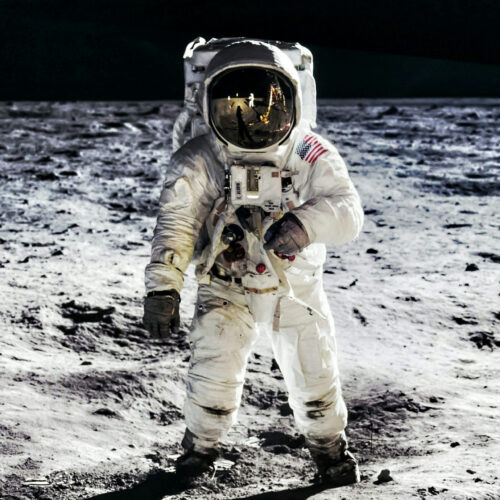
World War II and Pearl Harbor · The Korean War · The Cold War · The Civil Rights Movement · The Kennedy assassination · The Vietnam War · The Moon Landing · Watergate and the Nixon resignation · The Iran Hostage Crisis · The Gulf War · 9/11 and the Iraq War
Longitudinal threads — stories that developed over years and decades — include the Middle East conflict (tracked continuously from 1940), U.S. presidential elections, U.S. intervention in Latin America, Ukraine and the Soviet bloc, and the space program.
This publication was built to be right. That standard held for nearly 90 years.
Founded in 1940 by historian Hendrik Willem van Loon and journalist Bernard Person, World News Digest set out to be “a card catalogue to everything that has happened during the previous twelve months.”
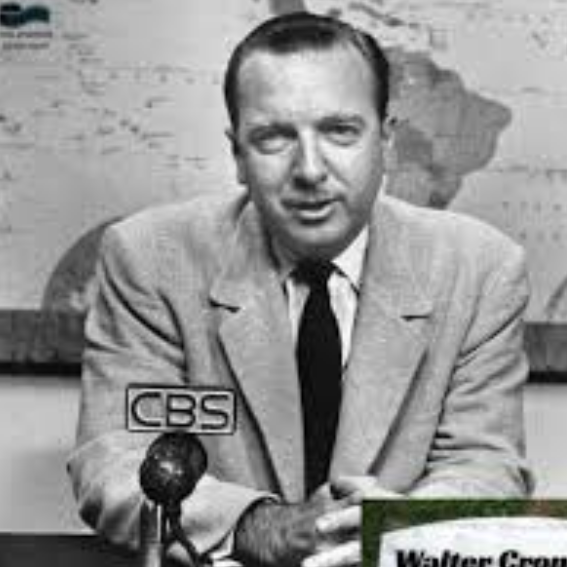
Walter Cronkite, writing the forward to the 1956 Yearbook, called it a resource “compiled with a view to reducing news to its factual essence.” Every article cross-checked. No opinion. No analysis. Who, what, when, where. That standard is what makes the Archive a research resource, not merely a historical news collection.
Longitudinal threads — stories that developed over years and decades — include the Middle East conflict (tracked continuously from 1940), U.S. presidential elections, U.S. intervention in Latin America, Ukraine and the Soviet bloc, and the space program.
Buy it once. Own it permanently.
One-time purchase: institution-specific pricing available.
Infobase customers are eligible for a discounted introductory rate. Contact your Infobase representative for details.
The Archive is designed to function as a permanent addition to your institution’s digital holdings — budgeted from collection acquisition funds rather than annual subscription lines. Contact your Infobase representative for institution-specific pricing, consortium rates, and trial access.
