
How educators and librarians can equip K-12 students, college learners, and public library patrons to analyze scientific claims, interpret environmental data, and distinguish evidence-based research from advocacy — with the help of authoritative digital resources.
Why Environmental Literacy Is a 21st-Century Essential
Every day, learners of all ages see many environmental claims. They find them on social media, in news headlines, and from peers and policymakers. Climate change, biodiversity loss, plastic pollution, and energy transition are not just scientific topics; they are politically charged, emotionally loaded, and often deliberately misrepresented. Whether the learner is a middle schooler completing a science project, a college student researching a policy paper, or a public library patron trying to make sense of the day’s headlines, the challenge is the same: how do you find and trust good information about the environment?
Environmental literacy — the ability to understand, evaluate, and act on information about environmental issues — has become as foundational as traditional reading and numeracy. It encompasses scientific reasoning, data interpretation, source evaluation, and the capacity to distinguish between peer-reviewed evidence and advocacy-driven narratives.
For educators and librarians, this creates a clear goal. Move beyond sharing environmental facts. Build environmental thinking instead. The question is no longer just “What do learners know about the climate?” but “Can learners evaluate a claim about the climate?”
The Challenge: Navigating a Noisy Information Ecosystem
The information environment that learners inhabit is simultaneously richer and more treacherous than ever before. A quick social media search on any environmental topic shows a mix of sources. You may see peer-reviewed summaries and industry-funded studies. You may also see activist campaigns and outright misinformation. These sources often look the same at a glance.
Research in information literacy consistently shows that learners struggle to identify the source credibility of online content. A landmark study by Stanford University’s History Education Group found that even digitally fluent students had significant difficulty distinguishing credible sources from unreliable ones — unable, for example, to tell advertisements apart from news articles or identify where information originated. The same patterns appear across age groups and settings, from secondary school classrooms to public library reference desks. Learners may not see the difference between a peer-reviewed journal study and a white paper from an advocacy group. They may not know how to read a data chart in a critical way. They may also not understand that correlation in environmental data does not mean causation.
Several specific challenges stand out in environmental contexts:
- Cherry-picking data: Choosing a short time window or one area to back a chosen conclusion. It ignores the bigger trend.
- Misrepresenting consensus: Overstating scientific disagreement on settled issues (such as the human causes of contemporary climate change) or understating genuine uncertainty on emerging questions.
- Conflating scales: Presenting local environmental successes as evidence against global trends, or vice versa.
- Source confusion: Treating policy documents, advocacy reports, or industry literature as equal to scientific research.
- Visual manipulation: Using misleading axes, truncated graphs, or selective time ranges in data visualizations to distort environmental trends.
Addressing these challenges requires more than a single lesson on “fake news.” It needs steady, guided practice with trusted resources that show what strong environmental science looks like. Educators and librarians can use these resources in teaching, programs, and reference work.
A Framework for Environmental Critical Thinking
Effective environmental literacy instruction and programming builds competency across three interconnected dimensions:
1. Analyzing Scientific Claims
Learners must develop the habit of interrogating any environmental claim by asking: Who produced this information? What methodology did they use? Has it been peer-reviewed or independently replicated? What do the primary sources actually say, as opposed to how they are being characterized?
This means teaching learners the structure of scientific literature. They should know the difference between original research papers, review articles, meta-analyses, and consensus statements. It also means helping learners recognize the signs of pseudoscience. Some claims cannot be tested. Some rely on authority without evidence. Others have not been peer-reviewed.
2. Interpreting Environmental Data
Data literacy is the engine of environmental literacy. Learners who can read a graph with care, checking the scale, source, time range, and units, are less likely to be misled. Instruction and library programs should include hands-on practice with real environmental datasets. Use temperature anomaly records, species population trends, air quality indices, deforestation rates, and energy transition statistics.
Crucially, learners should develop the capacity not just to read data but to contextualize it. A single year of data is rarely meaningful. Trends over decades matter most. You also need to understand the confounding variables involved.
3. Distinguishing Evidence-Based Research from Advocacy
Perhaps the most nuanced skill is helping learners understand that scientists and advocates can both be sincere. Advocacy can be informed by good science. A policy recommendation does not automatically invalidate a study. Learners need the ability to trace arguments back to their empirical foundations. They should ask not only, “What does this source claim?” They should also ask, “What evidence supports it, and how strong is it?”
This requires access to primary scientific sources. Textbooks or secondary reports are not enough. This helps learners see how science is built, shared, and debated.

Infobase Resources That Support Environmental Literacy
Two Infobase resource families work well for building these skills in many learning settings. They are Facts On File’s Science Center and the Video On Demand collection. Each offers unique strengths that support classroom teaching and library programs. This helps build deep, source-aware engagement that environmental literacy requires.
Facts On File’s Science Center: Authoritative Content for Scientific Reasoning
Facts On File’s Science Center is Infobase’s complete digital science resource. It includes two collections: Science Online, a traditional reference database of expert-curated scientific content. The Science Center also includes Today’s Science, a current-awareness resource. It is indexed toward news articles and current polling. It also covers today’s environmental and scientific topics. Together, they give learners, and the educators and librarians who support them, access to foundational knowledge and timely context. This support helps build strong environmental literacy.
Science Online: The Reference Foundation
Science Online offers reliable, curriculum-aligned articles across many scientific fields. It also covers environmental science, ecology, climatology, and Earth systems in depth. Its content is curated and reviewed by subject-matter experts. This makes it an ideal resource for learners. It helps them understand the science behind an environmental issue. Then they can meaningfully evaluate claims about it.
For environmental literacy, Science Online helps learners build basic knowledge. This helps them spot public claims that misstate the science. It also shows what rigorous, peer-informed scientific writing looks like.
Today’s Science: Current Events in Scientific Context
Today’s Science adds to Science Online’s deep references with timely coverage of environmental news, new research, and public discussion. Its index of current polls and daily topics is valuable. It helps learners see how scientific findings enter public debate. It also shows how they are often distorted. Librarians help patrons with questions about current environmental debates. Educators build lessons around ongoing issues. Both will find Today’s Science a practical tool. It helps bridge the gap between scientific literature and the headlines learners actually see.
What Facts On File’s Science Center Delivers for Environmental Literacy
- Peer-reviewed and expert-curated reference articles (Science Online) that model scientific writing standards. They help learners recognize authoritative sources.
- Current news coverage and contemporary polling (Today’s Science) that show learners how scientific issues enter public debate — and where misrepresentation commonly occurs.
- Covers key environmental science concepts, from the carbon cycle and atmospheric chemistry to ecosystem dynamics and biodiversity metrics. It provides the scientific grounding needed to evaluate claims in context.
- Clearly credited content with clear sources teaches learners to trace facts to their origins. It helps them avoid accepting summaries at face value.
- Integration of data, diagrams, and visual representations that build data literacy alongside conceptual understanding.
- Topic overviews that distinguish established scientific consensus from areas of active research, helping learners map the landscape of certainty and uncertainty in environmental science.
- Cross-disciplinary connections linking environmental science to chemistry, biology, physics, and policy — reflecting the genuinely interdisciplinary nature of real-world environmental challenges.
In practice, educators can use the Science Center to base research assignments on trusted sources. Learners can then explore the wider web. Librarians can guide patrons to Today’s Science when an environmental story raises questions. Then, they can direct them to Science Online for deeper background. By starting with Science Center content, learners build a basic sense of good environmental science. This helps them spot problems in other sources.
The Science Center is also valuable for teaching source comparison. Educators and librarians can ask learners to compare how a topic is covered. For example, compare ocean acidification or soil degradation.They can compare the Science Center with a popular media source. They can also compare a government agency website and an advocacy group’s materials. This side-by-side analysis builds the critical eye that is at the heart of environmental literacy.
Video On Demand: Bringing Environmental Science to Life
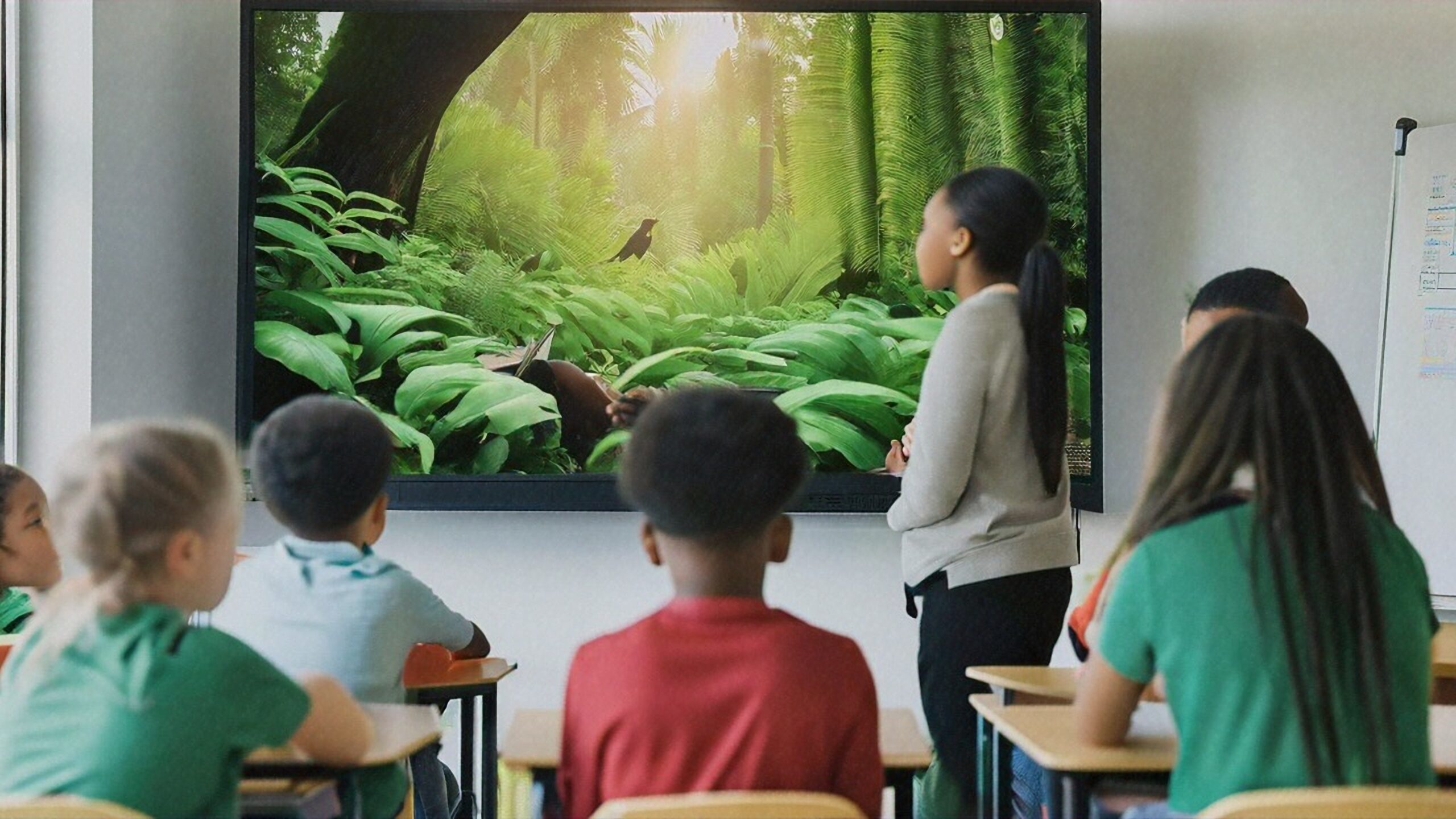
Infobase’s Video On Demand collection offers thousands of educational videos.
It covers science, social studies, and more.
It also includes a strong and growing selection on environmental topics. For environmental literacy, video is not just a supplement. It is a distinct and powerful medium. It supports learning in ways text alone cannot.
Environmental issues are inherently visual and dynamic. The bleaching of a coral reef is a real change. A glacier can pull back over decades. This is a real change. An invasive species can spread. This is a real change. Deforestation can reshape a landscape. This is a real change. Data tables and text can describe them, but they cannot fully show them. Video bridges this gap, making abstract environmental processes tangible and emotionally resonant — and giving learners direct exposure to scientists and researchers communicating their findings in their own words.
The Video On Demand franchise encompasses three distinct products, each tailored to a specific audience and setting:
Films On Demand — Academic Libraries & Higher Education
- A curated collection of documentary and educational videos aligned with college and university curricula. It supports environmental literacy in courses from introductory environmental science to advanced policy seminars.
- Content is created with researchers, field scientists, and subject-matter experts. It shows science’s evidence-based communication culture for college learners.
- Robust coverage of environmental topics at many scales. It spans local ecosystem health and global climate systems. It supports the interdisciplinary inquiry required in higher education environmental courses.
- Institutional access features designed for academic library workflows, including course reserve integration and usage analytics.
Classroom Video On Demand — K-12 Schools & School Libraries
- Curriculum-aligned video content is mapped to K-12 standards. It helps educators and school librarians add environmental videos to lesson sequences. They can do this without sacrificing instructional rigor.
- Age-appropriate content across grade bands makes it possible to build a clear environmental literacy path. This path can grow from elementary school through high school.
- Content that brings environmental data to life through visuals. It helps younger learners connect abstract scientific concepts. These include carbon cycles, food webs, and climate systems. It links these ideas to real-world, observable phenomena.
- Historical and longitudinal footage that allows students to observe environmental change over time, a dimension of understanding that static textbook resources cannot provide.
Access Video On Demand — Public Libraries & Community Settings
- A broad and easy-to-use video collection made for public library patrons of many ages and backgrounds. It supports different information needs, from curious adults to lifelong learners exploring environmental topics on their own.
- Content that contextualizes environmental data within real-world visual evidence, helping patrons move from headline awareness to genuine understanding.
- Coverage of current environmental issues and new topics. It matches the kinds of questions patrons bring to the reference desk.
- Accessible to diverse learners, including those who engage more readily with audiovisual formats than with text-heavy reference materials.
What Video On Demand Delivers Across All Settings
- High-quality documentary and educational content that links environmental data to real-world visuals. It helps learners of all ages move from numbers to meaning.
- Expert voices include scientists, researchers, and field practitioners who explain their methods and findings. They show what scientific communication looks and sounds like.
- Scalar coverage of environmental topics, from local ecosystem dynamics to global climate systems, building the contextual thinking that environmental literacy requires.
- Curriculum and standards alignment (Films On Demand and Classroom Video On Demand) for seamless integration into formal instructional sequences.
- Broad access and community relevance (Access Video On Demand) for public libraries, where patron needs are diverse. Patrons often choose resources on their own.
Video On Demand is especially valuable for critical media literacy exercises. Educators and librarians can use curated science videos as a baseline. They can show learners what strong, evidence-based environmental communication looks like. Then, they can invite learners to compare other online videos to that standard. Questions like “Does this video cite its sources?” “Who produced it and why?” and “What evidence does it present versus what does it assume?” become far more tractable once learners have a clear model of what good environmental communication looks like.
The combination of Facts On File’s Science Center and Video On Demand creates a layered resource environment. Learners can explore the same environmental topics in different ways. They can read expert-curated reference content. They can follow current environmental news. Or, they can watch scientists explain their work. All of this happens in a vetted, curriculum- and community-aligned ecosystem.
Strategies for Educators and Librarians: Putting the Resources to Work
Having access to excellent resources is only the beginning. The teaching and coding methods around them affect how learners think. Learners may build real critical thinking skills.Or they may just absorb better information without thinking much. Here are four high-impact strategies applicable across K-12, academic, and public library settings:
The Claim-Evidence-Reasoning Framework
Ask learners to find an environmental claim they saw in the media. Then use the Science Center to find trusted evidence about it. Finally, have them give a written or spoken reasoning chain. Link the evidence to the claim. This three-step process — Claim, Evidence, Reasoning — builds the argumentative structure that underlies scientific thinking. In public libraries, this framework can be used as a guided self-research plan. It helps patrons explore an environmental question on their own.
Source Triangulation Assignments
Pose a clear environmental question, like, “Is air quality improving in U.S. cities?” Or ask, “What is the current status of Arctic sea ice?” Require learners to answer using at least three types of sources. They should use a Science Center article, a government data source, and a news article. Learners then compare how each source treats the topic, noting agreements, discrepancies, and differences in framing. Today’s Science current-events indexing makes it especially useful for finding the news layer in this exercise.
Data Visualization Analysis
Use the Science Center’s diagrams and the Video On Demand visuals. Teach learners to read environmental data visualizations with a critical eye. Present two graphs of the same dataset. Use different axis scales or time ranges. Ask learners to explain how the visuals change their impression. This exercise builds lasting skepticism toward misleading data, a skill that matters for students and adults.
Expert Voice Comparison
Use Video On Demand — Films On Demand, Classroom Video On Demand, or Access Video On Demand as appropriate to the setting — to show learners how scientists discuss environmental topics in their own words, then compare this to how the same scientists or their research are characterized in advocacy materials, news coverage, and social media. Learners consistently discover significant gaps between what scientists actually say and how their work is represented — a discovery that is far more powerful coming from the learners’ own analysis than from an educator’s assertion.
Environmental Literacy Across Settings and Disciplines
Environmental literacy is not the exclusive domain of science classes or science-focused library collections. Its components span multiple disciplines and contexts, and integrating it broadly reflects the genuinely interdisciplinary nature of environmental issues.
- In K-12 English Language Arts, environmental literacy instruction can focus on rhetorical analysis — examining how environmental arguments are constructed, what appeals (to evidence, emotion, authority) they make, and how language choices frame issues in particular ways.
- In Social Studies and Civics, the focus shifts to the policy dimensions of environmental science: how scientific findings translate (or fail to translate) into policy, how different stakeholders interpret the same data, and how international environmental agreements are negotiated.
- In Mathematics, environmental data provides rich material for statistical reasoning — calculating rates of change, interpreting confidence intervals, understanding sampling methodology, and building mathematical models of environmental systems.
- In academic library instruction, environmental literacy is a natural extension of information literacy programming — source evaluation, information provenance, and understanding the research ecosystem that produces scientific knowledge.
- In public library programming, environmental literacy can be woven into adult learning series, community reading programs, and reference consultations, meeting patrons where they are and building skills that apply to civic participation as much as personal learning.
Facts On File’s Science Center and Video On Demand support this cross-setting approach. Science Center content can anchor a social studies unit on environmental policy as effectively as a science unit on climate systems. Video On Demand’s documentary content can serve as primary material for rhetorical analysis in an ELA classroom or as the centerpiece of a public library environmental film series. These are flexible tools, not single-subject or single-audience repositories.
Assessing and Evaluating Environmental Literacy
Traditional assessments — recall tests, multiple-choice questions about environmental facts — are poorly suited to measuring critical thinking capacity. Assessing environmental literacy requires tasks that ask learners to demonstrate the processes of critical analysis, not just the products of information consumption. For library settings, evaluation may focus less on formal assessment and more on observing how patrons engage with resources and questions over time.
Effective assessment and evaluation approaches include:
- Source evaluation rubrics: Ask learners to assess a set of environmental sources against explicit criteria — author expertise, methodology, peer review status, potential conflicts of interest — and justify their ratings.
- Comparative analysis tasks: Provide two accounts of the same environmental issue — one from a scientific source, one from an advocacy source — and ask learners to identify how each constructs its argument and what evidence each relies on.
- Data interpretation exercises: Present learners with an environmental dataset and ask them to draw conclusions, identify limitations of the data, and explain what additional information would be needed to strengthen those conclusions.
- Claim verification exercises: Provide a specific environmental claim and ask learners to use the Science Center and other vetted resources to evaluate whether the claim is supported, partially supported, contested, or unsupported by current evidence.
Conclusion: Preparing Critical Thinkers for an Uncertain World
Environmental issues will define the coming decades in ways that learners alive today will experience firsthand — as students, as citizens, as community members. The quality of the decisions made about these issues will depend in part on whether the people making them have the capacity to think critically about environmental evidence.
Educators and librarians who invest in environmental literacy are not simply teaching people about the environment. They are equipping learners with a transferable set of reasoning skills — the ability to evaluate evidence, interrogate sources, interpret data, and distinguish sound argument from sophisticated noise — that will serve them across every domain of an increasingly complex information landscape.
Resources like Facts On File’s Science Center and the Video On Demand collection provide the authoritative, context-rich foundation that this kind of instruction and programming requires. Science Center’s combination of reference depth (Science Online) and current-awareness coverage (Today’s Science) mirrors the way environmental understanding actually works — grounded in established science and responsive to emerging developments. Video On Demand’s three-product family — Films On Demand for academic settings, Classroom Video On Demand for K-12, and Access Video On Demand for public libraries — ensures that every learner, in every setting, has access to high-quality visual content that brings environmental science to life.
By grounding environmental literacy in the best available scientific content and making that content accessible through multiple modalities and across institutional contexts, these resources help educators and librarians transform environmental education from the transmission of facts into the cultivation of thinkers.
In a world where environmental claims are inescapable and the stakes of getting them wrong are high, that transformation is not a luxury — it is a responsibility.
