
Building Civic Literacy Skills: How to Guide Students Through Today's Toughest Debates
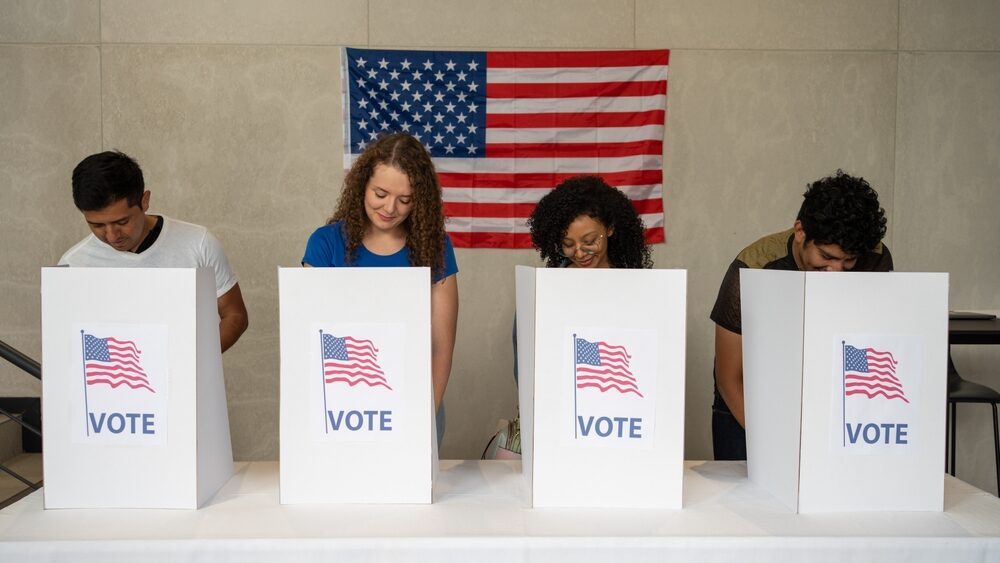
This year carries unusual weight for anyone thinking about civic education. 2026 marks the 250th anniversary of the Declaration of Independence, arriving in the same year as the midterm elections, when all 435 House seats, 35 Senate seats, and 39 governorships go before voters. A quarter-millennium of self-government and a fresh round of decisions about where the country goes next are landing on the calendar together. Few moments make a stronger case for building civic literacy skills in students and library patrons alike.
Civic literacy does real work in a democracy. It empowers voters by giving them the tools to understand political systems and candidates well enough to make informed choices at the ballot box. It drives change by teaching people how to contact elected officials, advocate for policies, and navigate local government, turning frustration into direct community impact. And it protects democracy itself, encouraging critical thinking and pushing back against the disengagement that weakens democratic institutions over time.
None of that happens automatically, though. It takes deliberate teaching, grounded in research on how people actually learn to evaluate competing claims.
Civic Literacy Skills Grow Out of Information Literacy
Civic literacy and information literacy overlap more than people realize. The ACRL Framework for Information Literacy describes authority as something constructed and contextual rather than fixed, so learners must weigh who is speaking, why, and for what audience before they accept a claim. That idea reshapes how students approach a story like the one above, where officials and investigators offer competing accounts of the same events. Rather than asking whether something is simply true or false, students learn to ask whose expertise a source reflects, what evidence backs each account, and what perspective might be missing.
This distinction matters because students already form opinions on political topics online, often without any structured guidance. Researchers Joseph Kahne and Benjamin Bowyer studied a nationally representative group of young people and found that students who had prior media literacy instruction judged the accuracy of political claims more astutely than those who hadn’t received that training. Evaluation skills can be taught, but only when schools build the practice into coursework deliberately, and election cycles like this one offer a live, relevant case study for doing exactly that.
Misinformation Raises the Stakes
Add the spread of misinformation to this picture, and the need for structured teaching grows sharper. Claire Wardle and Hossein Derakhshan’s report on information disorder for the Council of Europe separates misinformation, disinformation, and mal-information into distinct categories, each spreading through different motives and channels. During an election season, a single incident can circulate through all three within hours. Students who understand these categories can trace a claim back to its origin, compare it against multiple credible sources, and notice when content is designed to provoke rather than inform.
Getting students there takes more than a single lesson.
Teaching Balanced Perspective Analysis in Practice
A few practices recur throughout the research on this topic. Pairing every claim with its counterargument, rather than presenting one side and moving on, helps students weigh evidence instead of picking a team early. Anchoring discussion in primary sources gives them something concrete to examine, instead of a secondhand summary someone else has already interpreted. And placing a story in its historical context helps students recognize how current disputes connect to longer patterns in election administration and oversight, rather than treating each news cycle as unprecedented.
Applied consistently, this approach strengthens the same civic literacy skills students will use long after this election cycle ends.
How Infobase Supports This Workflow
Infobase built its research platform around this exact approach, so instructors don’t have to assemble it from scratch during an already demanding election season.
Issues & Controversies centers topics like election integrity and voter access on original pro and con arguments written by subject experts, not pulled from partisan sources. Primary documents, court case summaries, and Reuters reporting sit alongside those arguments, and built-in citation tools help students move from research to a defensible written position.
A story like the Fulton County and Ohio investigations rarely stands alone, though. World News Digest provides the contemporaneous factual record of how election-related disputes have developed over time, which helps students notice when a current headline echoes—or departs from—past patterns. History Center extends that context further back, drawing on primary sources to show students how election administration controversies have played out across U.S. history.
Polling the Nations rounds out the picture by answering a question students often skip: what does the public actually think about these investigations, and how has opinion shifted as the story developed? With more than 750,000 poll questions pulled from over 1,000 nonpartisan sources, it lets students test their assumptions against real data rather than guesswork or anecdote.
A Connected Path to Stronger Reasoning
When a student explores a topic in Issues & Controversies, checks its history in World News Digest, adds deeper context through History Center, and grounds an argument in Polling the Nations data, they practice the full cycle of reasoning the research describes. With a contested election season already underway, that skill set has an immediate, real-world testing ground.
Want to see how Infobase can support information literacy skills development? Connect with our team for a demo.
