
As the United States celebrates its 250th anniversary, the timing couldn’t be better for a fresh look at how we teach history. Whether you’re using the summer to plan next year’s programming or already back at the reference desk, this anniversary is a natural hook for building out history instruction and collection development. But here’s a question worth asking: are we helping students engage with history, or are we just handing them facts about history? That’s where information literacy in history education comes in—and school and academic librarians are uniquely positioned to lead the charge.
What Information Literacy in History Education Actually Means
Librarians and educators have refined this concept for decades. So, let’s review what research says it needs.
Researchers Addison and Meyers describe information literacy as encompassing three things: the practical skills to find and evaluate sources, the cognitive habits that help us reason through problems, and the ability to participate meaningfully in information-rich communities (Addison & Meyers, 2013). In other words, it’s not just “can a student use a database.” It asks, “Can a student tell the difference between a primary source and an opinion about it?” It also asks, “Do they know what to do with each one?”
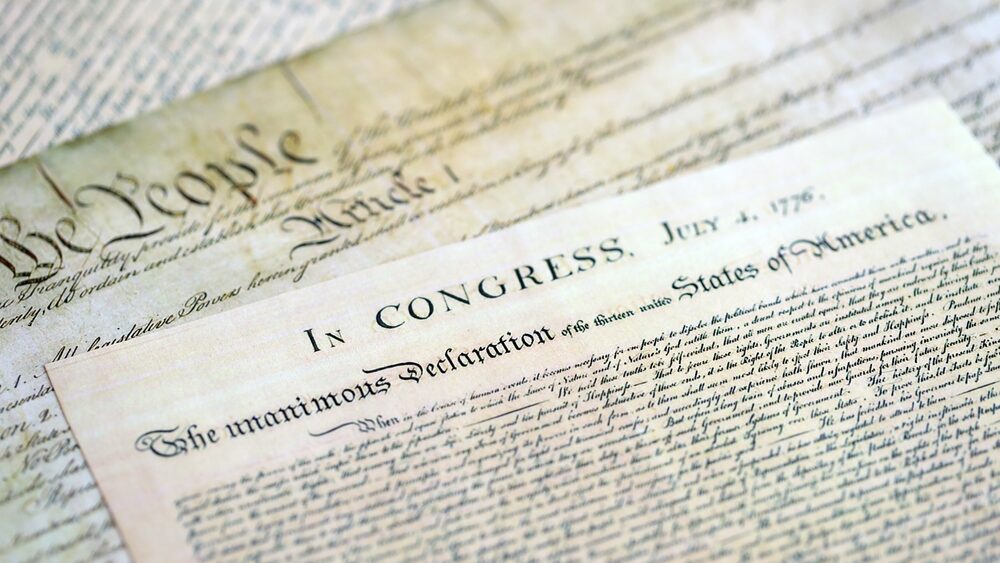
For history specifically, this distinction is everything. A textbook can tell students that the Declaration of Independence was signed in 1776. Only genuine information literacy instruction—the kind librarians have championed for decades—can help them understand why it mattered, who was excluded from its promises, and how historians still argue about its meaning today.
Why This Matters More During an Anniversary Year
Big historical anniversaries tend to generate a flood of content—documentaries, op-eds, social posts, and yes, plenty of misinformation dressed up as history. That’s precisely why the timing matters. When students are bombarded with competing narratives about what America’s founding “really” means, they need more than trivia. They need tools to judge evidence on their own. Librarians are often best equipped to teach that.
Cognitive psychology research shows that students retain and transfer skills more effectively when instruction is built around real problems rather than abstract lectures (Cook & Klipfel, 2015). For instruction librarians, that means one-shot sessions and co-taught units work best when they give students a real primary source. It could be a soldier’s letter, a suffragist’s speech, or a newspaper from 1776. This works better than only explaining what a primary source is.
The Research Backs This Up
It’s not just theory. When researchers surveyed school media specialists and education majors, they found a real gap: many new classroom teachers hadn’t been trained to teach these skills, even though most wanted to prioritize them (Stockham & Collins, 2012). That study also found something librarians already know well: teachers often expect the librarian to carry this instructional weight, whether or not there’s a strong collaborative relationship in place. It’s a reminder that librarians aren’t just supporting information literacy in history education—they’re frequently the primary drivers of it.
Paul Zurkowski, who coined the term “information literacy” back in 1974, argued that it’s ultimately about something bigger than academic performance: active citizenship. He believed information literacy was “an antidote” to the kind of information control that undermines democracy (Kelly, 2023). Half a century later, as America marks its 250th year, that idea feels especially relevant. It connects to the work happening in libraries every day.
Building Information Literacy Skills Through the Library
Here’s the good news: none of this requires reinventing your instruction program from scratch. A few research-backed strategies go a long way, whether you’re running a one-shot session, building a topic guide, or partnering with a classroom teacher on a unit:
- Anchor sessions in real problems. Instead of a generic overview of colonial life, frame instruction around a question students have to investigate.
- Use primary sources, not just summaries of them. Letters, speeches, and photographs teach evidence evaluation in a way secondhand summaries never will.
- Keep the scope tight. Focus on two or three key skills per session rather than overwhelming students with everything at once.
- Make it a narrative. Stories stick. Framing historical research as detective work keeps students engaged while building real analytical muscle.
The catch? Delivering on this requires access to quality primary sources and scholarly context—and building that collection from scratch, session after session, is a massive lift for any single library.
How Infobase Supports Information Literacy in History Education
That’s the gap our History Center was built to fill.
Rather than sending students down a Google rabbit hole (where “primary source” and “random blog post” can look deceptively similar), History Center gives librarians a curated, standards-aligned platform with seven specialist collections—from American History and American Indian History to Modern World History and Issues & Controversies in History. Each collection pairs primary source documents with scholarly context, so students learn to analyze evidence instead of just locating it.
For librarians building out programming or instruction around the anniversary, that means:
- Pre-built topic centers that give you a ready starting point for America’s 250th anniversary displays, guides, or co-taught units
- Thousands of authenticated primary sources—letters, speeches, legislation, images—ready to pull into instruction sessions or research guides
- Standards alignment across K-12 and higher education, making it easier to demonstrate the value of information literacy programming to administrators and teaching partners alike
Make the Anniversary Count
America’s 250th birthday will pass whether or not libraries use it as a teaching moment. But it’s a rare, built-in opportunity to show students that history isn’t a list of facts to memorize—it’s a set of evidence to investigate, question, and understand for themselves, with librarians leading the way.
Want to see how History Center can support information literacy in history education at your library? Explore the collections or connect with our team for a demo.
