
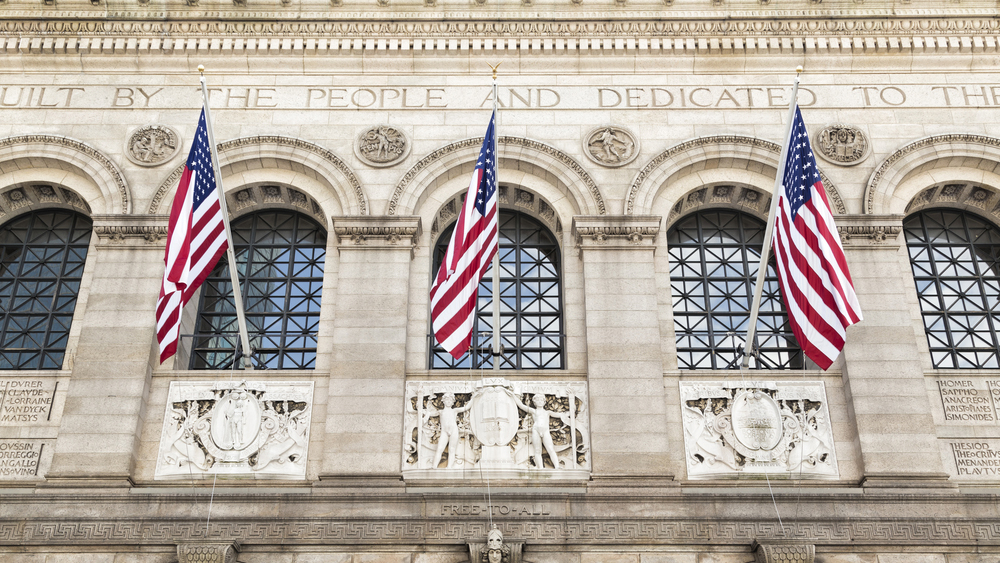
Every milestone anniversary brings a predictable wave of interest. Family history questions pile up at the reference desk. Kids start National History Day projects. Book clubs pick up Revolutionary War fiction. Retirees suddenly want to know how their hometown got its start. America’s 250th will bring all of that, just bigger. That’s exactly why public libraries should start thinking now about information literacy in history education. It’s not just an academic concept—it’s a service libraries are uniquely built to deliver.
Information Literacy Isn’t Just a School Concept
It’s easy to assume information literacy lives in classrooms and academic libraries. But it doesn’t. Public libraries have always helped people separate signal from noise. They just don’t always call it that.
Addison and Meyers frame information literacy as three overlapping things: practical search-and-evaluate skills, the mental habits that help people reason through conflicting claims, and the ability to engage meaningfully within a community of information (Addison & Meyers, 2013). Now swap “student” for “patron.” That’s exactly what happens at a reference desk every day. Someone walks in with a question, and a librarian helps them find not just an answer, but a reliable one.
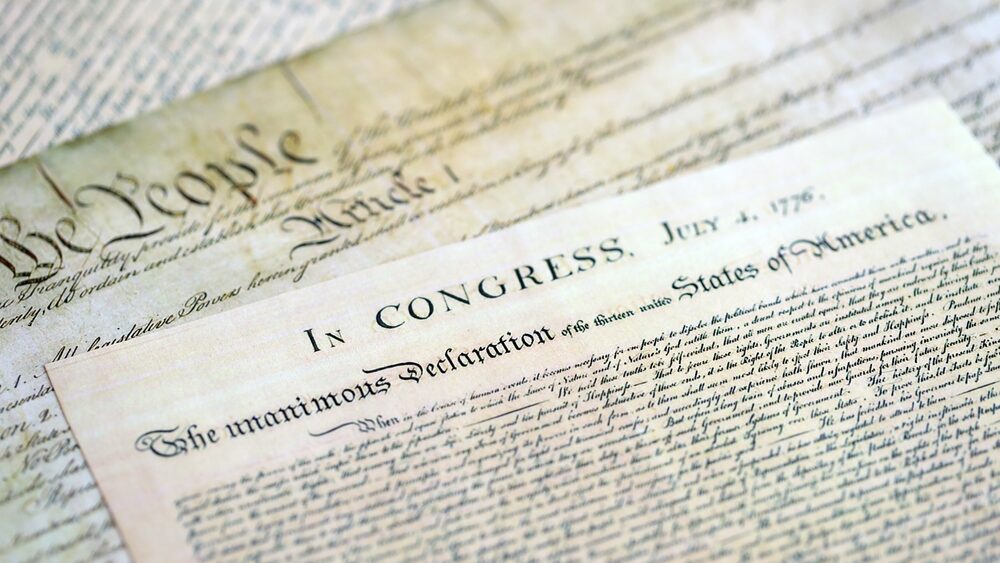
Applied to history, that third piece matters most. Anyone can look up when the Declaration of Independence was signed. But understanding why it was written that way, whose voices it left out, and how interpretations have shifted over 250 years takes more than a quick search. It takes guided discovery—and that’s a public library specialty.
An Anniversary Year Means More History—And More Noise
Anniversaries are magnets for content, and not all of it holds up. Documentaries, viral social posts, and op-eds will all compete for attention this year. Each one offers its own version of what America’s founding means. For a community trying to sort through that noise, the public library is often the most trusted place to turn.
Because of this, the format of a program matters as much as its content. Research on skill retention shows that people hold onto and apply what they learn far better when it’s tied to a real, hands-on problem instead of passive information delivery (Cook & Klipfel, 2015). A lecture about primary sources will fade fast. But handing someone an actual 18th-century newspaper clipping, and asking them to draw their own conclusions, tends to stick.
What the Research Suggests About Confidence vs. Skill
There’s also a useful cautionary note in the research. One study found that many people assume they already have strong research skills simply because they grew up with constant access to information (Stockham & Collins, 2012). But confidence and competence aren’t the same thing. And that gap doesn’t disappear after graduation.
It shows up at the reference desk just as often as in a classroom. Think of the patron who trusts a website because it “came up first.” Or the family history researcher who accepts an unverified genealogy record at face value. This is exactly the gap public libraries can close. Not through a syllabus, but through everyday moments: a reference conversation, a program, a well-designed research guide.
Paul Zurkowski coined the term “information literacy” in 1974. For him, the stakes were civic, not academic. He described information literacy as a safeguard against the kind of information control that erodes democracy and active citizenship (Kelly, 2023). Public libraries are open to everyone and answerable only to their communities. So they may be the institution best built to carry that mission forward, especially in a year meant to celebrate citizenship itself.
Bringing This Into Everyday Library Work
None of this calls for a new department or a bigger budget. Instead, it calls for a shift in how existing programs and services get framed:
- Give people a real question to chase. A display titled “What Really Happened at [Local Event]?” invites investigation. A static timeline doesn’t.
- Put actual documents in patrons’ hands. Letters, maps, and photographs teach people to weigh evidence. Summaries alone don’t.
- Resist the urge to cover everything. One well-explored angle beats a broad, shallow survey of “everything about 1776.”
- Frame it as a story, not a lesson. People remember a mystery they helped solve far longer than a fact sheet.
Still, most libraries run into the same obstacle: source material. Verified, well-contextualized primary sources take real curatorial effort to assemble. And most libraries simply don’t have the staff time to build that collection from zero for every program.
Where Infobase Fits In
That’s the exact problem History Center solves.
Instead of patrons sifting through search results and hoping to land on something credible, History Center offers a ready-made, expert-vetted collection. It spans seven specialized areas, including American History, American Indian History, African American History, and Modern World History. Every document comes with scholarly context already attached. So a patron—or a librarian building a program—isn’t just finding a source. They’re getting the context needed to understand it.
For public libraries gearing up for the anniversary, that means:
- Ready-built topic centers you can turn into a display, a book list, or a program outline without starting from scratch
- A deep well of authenticated primary sources for everything from a quick reference answer to a full evening program
- Content flexible enough to serve a fourth grader’s homework question and a retiree’s genealogy project in the same afternoon
The Library’s Moment
America only turns 250 once. Whether that milestone becomes a real opportunity to build sharper thinkers, or just another display of red-white-and-blue decorations, depends on what libraries do with it. Public libraries already have the trust, the space, and the reach. History Center just makes it easier to fill that space with the right material.
Curious what information literacy in history education could look like at your library this year? Explore History Center’s collections or connect with our team for a demo.
