
From Page to Screen: How Video Helps Learners Engage with Classic Literature
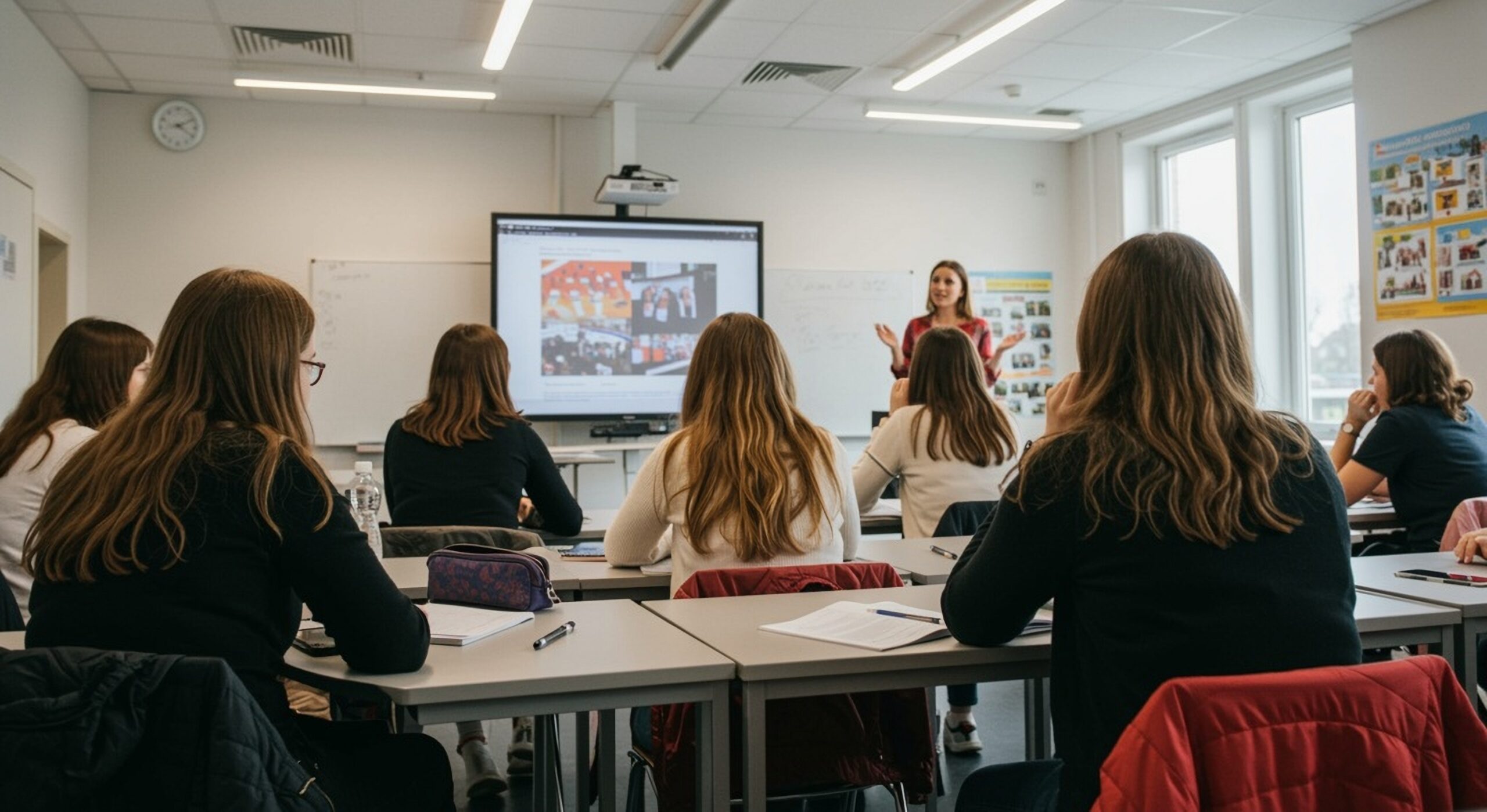
Many students encounter classic literature the same way: staring down dense language, unfamiliar social codes, and worlds that feel impossibly distant. Whether it’s the moral ambiguity of Heart of Darkness, the social constraints of Middlemarch, or the shifting narration of The Sound and the Fury, classic texts can feel like locked doors.
For many students, struggle is not a sign of failure; it’s a natural response to texts shaped by different historical moments, cultural assumptions, and literary conventions.
Educators are increasingly finding that the key to unlocking these stories may already be in students’ hands. Rather than viewing screens as a distraction, they are reframing video as a powerful companion to close reading—one that supports comprehension, contextual understanding, and deeper analysis. Video becomes a way to boost student engagement in English class while honoring the complexity of the text itself.
The journey from page to screen isn’t about replacing the book, but building a bridge to it. When used intentionally, video provides essential context and expert perspective, helping students move past surface-level confusion and toward interpretation. It transforms frustrating literary analysis into a shared ‘aha!’ moment of discovery.
Beyond the Words: How Film Makes the World of a Book Instantly Real
It’s one thing to read a description of industrial England in the opening chapters of Hard Times, but another to actually see the rigid factory towns, the crowded streets, and the physical consequences of industrialization on everyday life. For many students, classic literature describes worlds so distant they feel imaginary.
Video works like a passport, instantly grounding the story in a tangible reality. This is one of the most effective visual learning aids for literature because it transforms abstract words into a concrete world.
This visual foundation becomes even more crucial when narratives grow complex. Instead of struggling to imagine the chaos of a battle scene in The Iliad or the social choreography of a 19th-century drawing room, students can watch these moments unfold. With the basic action clarified, cognitive energy is freed for higher-order thinking—analyzing motivation, theme, and structure—where literature study truly lives. By establishing the setting and tone, video provides a sturdy frame on which to hang the author’s words. Rather than competing with text, it prepares students to read it more attentively.
Reading Between the Lines: What Performance Reveals About Character
Sometimes, the most important things a character feels are never written down. In The Great Gatsby, the novel famously describes Jay Gatsby’s smile, but watching an actor deliver it reveals layers of longing, performance, and self-invention that learners may struggle to interpret from the page.
An actor’s performance turns subtext—the unspoken thoughts and feelings simmering beneath the dialogue—into something visible. A pause, gesture, or shift in tone can illuminate power dynamics, internal conflict, or emotional constraint in ways that deepen textual understanding rather than bypass it.
This becomes especially valuable when students encounter heightened or unfamiliar language. In plays like Macbeth or Doctor Faustus, verse can initially obscure motivation. Seeing ambition, fear, or moral hesitation embodied on screen helps students recognize that these characters are not distant literary artifacts but psychologically complex individuals.
This comparison between page and performance sparks meaningful discussion. After reading a key scene, try watching the film version and asking, “What did the performance make clearer—or more ambiguous—than text alone?” Students aren’t skipping the text; they are learning to interrogate it more closely.
Is Watching the Movie Cheating? How Video Is a Bridge, Not a Shortcut
It’s a familiar concern: does watching a movie adaptation undermine reading? When video replaces the text, the worry is justified. But when video is used as a scaffold, it becomes a support structure rather than a shortcut.
Imagine a student watching a brief scene from a filmed adaptation of Frankenstein before reading the corresponding chapter. Suddenly, character relationships, tone, and narrative stakes are clearer. That clarity builds confidence—especially for developing readers—making the text feel approachable rather than intimidating.
With the narrative groundwork in place, students can finally attend to literary craft: the layered irony of Austen’s narration, the symbolic weight of objects in Lord of the Flies, or the shifting perspectives in modernist fiction. Video clears the path so literary analysis can begin.
This strategy reframes frustration as engagement. Context first, analysis next. Students are now prepared to ask deeper questions—about authorial intent, adaptation choices, and thematic emphasis.
From Viewer to Critic: Sparking Analysis Through Adaptation
That final question—why did the adaptation change things?—is where critical thinking takes hold. When a film version alters a character arc in The Handmaid’s Tale or compresses narrative time in Beloved, those decisions invite interpretation. Adaptation becomes an argument, not a summary.
Exploring these choices is the heart of media literacy—a crucial skill for navigating today’s world. It’s the ability to think critically about the messages we consume. By comparing the book to the movie, students learn that every story is told from a point of view. They begin to see literature not as fixed, but as something interpreted and reinterpreted over time.
After reading and viewing, try asking:
- What choice did the adaptation make that stood out most?
- How did that choice shift the meaning of the scene?
- Why might the director be responding to that the author wasn’t?
These questions transform a simple book-versus-movie debate into a powerful lesson in analysis.
Building Better Literature Experiences Through Integrated Resources
Where classic literature once felt like a locked door, the screen can become a key. But the greatest impact comes when video, text, and criticism are thoughtfully integrated—not scattered across disconnected tools.
With the expansion of video content in Bloom’s Literature—now including hundreds of expertly curated films, lectures, and adaptations—educators can seamlessly pair authoritative scholarship with visual context. And with Bloom’s now part of the integrated Infobase platform, students can move fluidly between primary texts, critical essays, and video content within a single research experience.
This integration reduces friction and keeps students focused on inquiry rather than navigation. After reading a chapter, watching a related clip, and exploring scholarly interpretation—all in one place—students are better positioned to notice nuance, ask questions, and form their own interpretations.
The result is more than engagement. It’s deeper comprehension, stronger analysis, and a more meaningful connection to literature. Not just a better assignment—but a clearer path to appreciating the stories that continue to shape how we understand the world.
When students can move seamlessly between literary texts, scholarly interpretation, and visual context, classic works become more accessible and engaging. With hundreds of new videos and a new home on the integrated Infobase platform, Bloom’s Literature supports deeper analysis while simplifying research.
Our team would be glad to help you see what’s new and discuss how Bloom’s Literature can support your teaching and learning goals. Schedule a conversation with an Infobase team member to learn more.
